Chip design in Ukraine
Does Ukraine produce chips? Ukraine has no chip factory. The country is building a fabless industry that designs chips at home and has them manufactured abroad, on top of Europe's largest titanium reserves.
This article describes Ukraine's work to design its own chips. A chip, also called an integrated circuit, is a small piece of silicon that holds millions of tiny electronic switches called transistors. A processor is the chip that carries out a program's instructions. Ukraine has no chip factory, so the country follows a fabless strategy: Ukrainian companies design chips, and foreign factories manufacture them. The sections that follow describe the design community, the research institutes behind it, the laws and investment frameworks that support it, the minerals beneath it, and the limits the plan faces. The sources appear at the end.
The interactive map below shows where chip design happens: universities and research institutes, chip factories, and the mineral regions that supply the electronics industry, from quartz to rare earths. Click a point to read its story, or filter the layers by category.
Geography comes from Natural Earth. Mineral data comes from the USGS Mineral Commodity Summaries. Regions and flows are approximate. Last reviewed October 23, 2026
Download the data (JSON)The Kvazar inheritance
Processors have been built in Kyiv before. During the Soviet era, the Kvazar production association in Kyiv made the KR580VM80A, a copy of the Intel 8080. That Intel chip was the processor inside the Altair 8800, the machine that started the personal computer industry. Western chips could not be bought or licensed across the Cold War divide, so the design was rebuilt at home, and that processor became one of the most widely used in Soviet equipment[37]. The plant later listed the K1810VM86, a copy of the Intel 8086, among the products it offered[38]. Kvazar-IS, the plant's successor company, still sells microcircuits and transistors[47].
Copying was the price of a closed instruction set. An instruction set is the list of machine commands a processor understands. In the 1970s every instruction set belonged to the company that created it, and inside the Soviet Union there was no legal route to use one. RISC-V is an instruction set published as an open standard: anyone can read the specification and implement it without a license, and no company holds the right to withhold it.

A design-first industry
A fabless company designs chips but does not own a factory. It sends its finished designs to a foundry, a company that manufactures chips for other firms. Most foundries operate in Taiwan and other Asian countries. At the Ukraine Global Innovation event in November 2023, Valeria Ionan, the deputy minister of digital transformation, announced that Ukraine would create a network of fabless companies for automated microcircuit design. The stated goal is to produce up to 50,000 chips per month within three years for precision weapons[2,3]. Mykhailo Fedorov, the deputy prime minister and minister of digital transformation, said the ministry planned to develop and present a Ukrainian chip in 2024[4]. The sector the plan builds on is real. Market data cited by UkraineInvest shows that more than 5,000 companies and individual entrepreneurs in Ukraine were engaged in electronics manufacturing as of late 2024[11]. The stated customer is defense production. The Ministry of Defense reported that drone output grew from a few thousand units in 2022 to 4 million in 2025, with a target above 7 million for 2026[33,34]. Drones and guided munitions are built around microcontrollers and radio chips.
The research base
The Lashkaryov Institute of Semiconductor Physics in Kyiv is the country's main research institute for semiconductors. It was founded in 1960 as part of the National Academy of Sciences of Ukraine[6]. The Microelectronics Department of the Igor Sikorsky Kyiv Polytechnic Institute trains chip designers and is one of the country's oldest university programs in the field[8].
Foreign fabless companies already design chips in Ukraine. Melexis, a Belgian maker of sensor chips, runs a design office in Kyiv where Ukrainian engineers define, design, lay out and test microchips[5,9]. In 2018 the company opened a joint analog electronics laboratory with the Kyiv Polytechnic Institute, which trains the engineers the industry needs[7]. The wider technology sector that feeds this pipeline is large: IT services exports reached 6.66 billion dollars in 2025, the largest services export in the country[35].
Chips Act UA and the 2030 goal
The Ministry of Digital Transformation planned to introduce the Chips Act UA in 2024. This legal package, modeled on the European Chips Act, would offer subsidies, tax reductions and clear rules for technology transfer[10,12]. The government's innovation strategy, approved by the Cabinet of Ministers on 14 January 2025, sets the goal of placing Ukraine among the top 15 countries in microelectronics and reaching 1% of global chip production by 2030[10,11]. The Semiconductor Association of Ukraine (NSAU) unites companies, researchers and state institutions to build the ecosystem the strategy needs[1].
The legal framework for investors
Diia City is a special legal and tax regime for technology companies that has operated across Ukraine since 2022. The Parliament created it through the law On Stimulating the Development of the Digital Economy of 15 July 2021, and residents pay reduced tax rates on income and profits[13,14].
Industrial parks operate under the law On Industrial Parks, and about 100 parks were registered as of 2025. The 2025 state budget allocated 1 billion hryvnias, about 25 million dollars, for investment incentives for significant investors and industrial parks[15]. In April 2025 Ukraine and the United States signed an agreement establishing the Reconstruction Investment Fund, a joint fund that draws revenues from future licenses for Ukrainian mineral deposits[17,18]. The Ministry of Economy publishes a catalogue of the registered parks in English[30], and the European Union's Ukraine Facility, in force since March 2024, provides up to 50 billion euros for 2024 to 2027, with disbursements linked to the reforms in Ukraine's plan[29].
Electronics at war
The full-scale invasion changed semiconductors from an export ambition into a supply problem. By late 2025 the Ministry of Defense and the Ministry of Digital Transformation had contracted 1.8 million drones of all types for about 147 billion hryvnias[39]. Production shifted from importing finished systems to assembling them from components at home, and drones that fly on a spool of fiber-optic cable instead of radio, so that jamming cannot cut the link, were developed during the war[40].
The state built an institution around this demand. BRAVE1, a state-backed defense technology cluster launched in April 2023, connects developers with the armed forces and had awarded more than 1,000 grants worth 6.2 billion hryvnias, about 139 million dollars, by late 2026[41]. The cluster publishes its technology priorities together with the Ministry of Defense, and they cover the fields that consume embedded processors: unmanned vehicles, guidance, electronic warfare and artificial intelligence[43].
The war also showed where weapons get their chips. When researchers at RUSI, a British defense studies institute, disassembled Russian weapons recovered in Ukraine, about 70% of the 450 microelectronic components they examined came from United States companies[42]. Export controls on such components have become an instrument of the conflict. The domestic design program answers the question the war made concrete: which parts of a weapon depend on a decision made in another country.
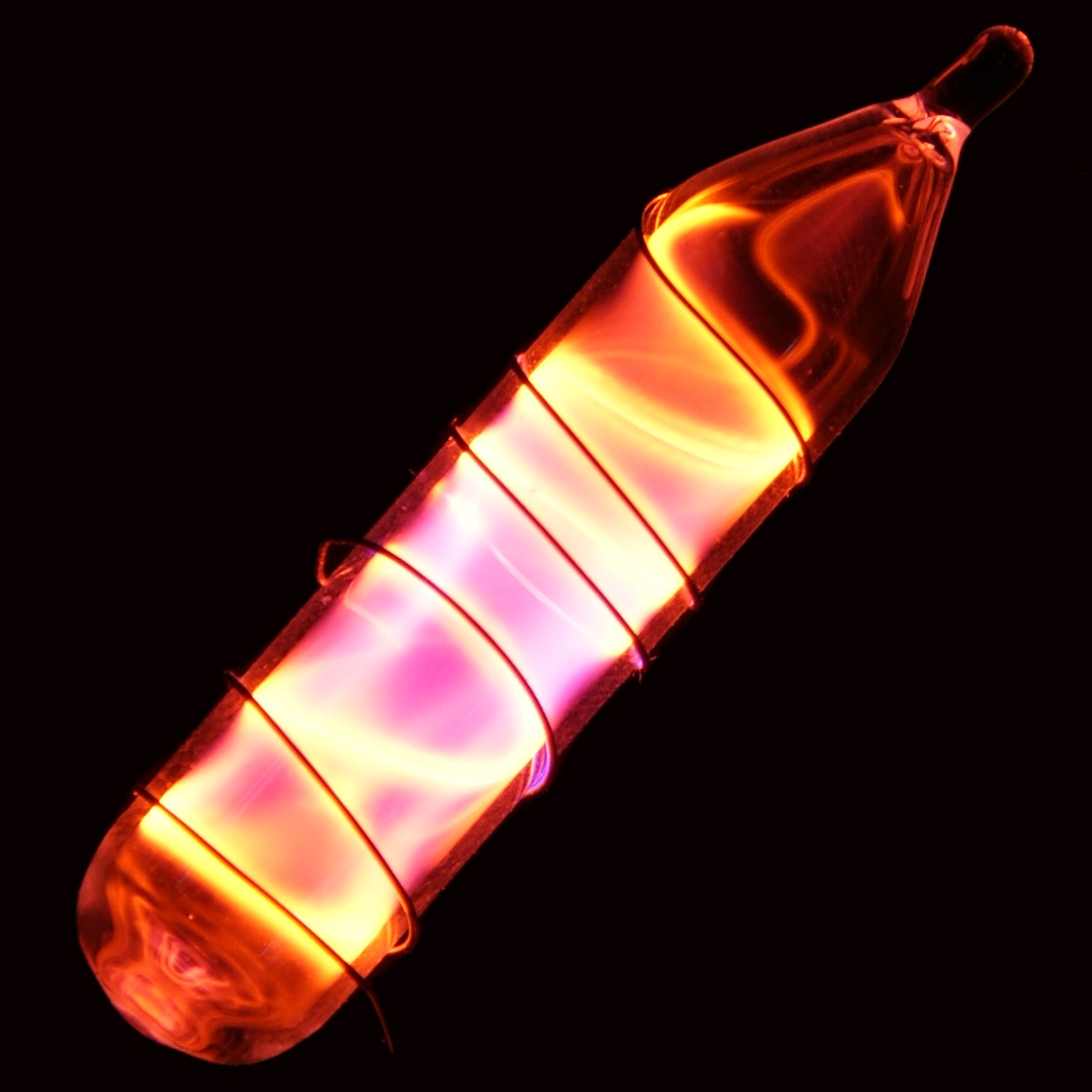
Dependency runs both ways. Neon is the gas that carries the light of the lasers used to carve chip patterns. No one mines it. It is separated from air, and before 2022 two Ukrainian companies, Ingas of Mariupol and Cryoin of Odesa, purified about half of the world's semiconductor-grade supply[44]. Both stopped production after the full-scale invasion, and the U.S. Geological Survey still lists rare gas supply from the region as limited[45]. The country does not own a neon deposit. Neon is a refining capability, built on the air separation units of Soviet steel plants, and the war interrupted it.
Ukrainian armament
Drones dominate Ukraine's armament production, and their electronics are mostly off-the-shelf parts. No Ukrainian weapon is documented to run on a RISC-V core; public surveys of components in Ukrainian FPV drones list chips with ARM cores[50]. The entries below name each part and what is documented about it.

This is the main weapon type in this class. No Ukrainian FPV drone is documented to run on a RISC-V core; public surveys of their components list chips with ARM cores[50].
The computer that keeps the aircraft stable and drives the motors. Flight controllers documented in Ukrainian FPV drones use STM32 microcontrollers, whose cores are ARM Cortex-M designs[50].
This part varies motor speed. Units in this class use STM32F051, STM32G071 or GD32E230 parts; the GD32E230 is a clone of an STM32. All carry ARM cores[50].
This is the receiver end of an open radio link. Some ExpressLRS receivers are built on the ESP32-C3, a microcontroller whose core implements the RISC-V instruction set[52][51]. Which receiver a given Ukrainian unit carries is not published.
The mineral base
Ukraine holds Europe's largest titanium reserves, about 7% of the world total, and is among the top five countries for explored graphite reserves[19]. The Irshansk mining complex in the Zhytomyr region, run by the state company UMCC Titanium, mines ilmenite. Ilmenite is a titanium ore used in aircraft parts, paint and electronic components[21]. Of Ukraine's six graphite deposits, only the Zavallia deposit in the Kirovohrad region is mined today. Graphite is the material used in battery anodes and in electrodes for steelmaking[22].
The Polokhivske lithium deposit in the Kirovohrad region holds more than 760,000 tons of lithium carbonate equivalent, one of the largest lithium deposits in Europe[23,24]. Ukraine's other major lithium deposits, Shevchenkivske in the Donetsk region and Kruta Balka in the Zaporizhzhia region, lie in territory occupied by Russia[25]. The government's raw materials strategy runs to 2056. It aims to develop 20 exploration and extraction projects and to build domestic processing for titanium, graphite anodes, batteries and rare earth oxides, so that Ukraine exports processed materials rather than raw ore[20]. The occupation reaches beyond lithium. According to the SecDev assessment cited by the BBC, Russian forces held 63% of Ukraine's coal mines and about half of its manganese, caesium, tantalum and rare earth deposits[31]. The Azovske rare earth deposit in the Donetsk region and the Novopoltavske deposit in Zaporizhzhia, which carries rare earth and niobium ores, lie inside the occupied territory[32].
Limits
Ukraine designs chips but does not make them. Government plans describe a fabless industry, one where foreign foundries would do the manufacturing. The production models the ministry reviewed depend on the Chips Act UA legislation, which as of 2026 had still not reached the Verkhovna Rada. The ministry expects the draft to arrive in parliament by the end of 2026[12,36]. The production targets announced in 2023 were goals for the following three years[2].
Most of this mineral wealth remains untapped. UkrLithiumMining holds the license for the Polokhivske deposit, received the right to use it without a tender, and years later extraction has not begun[26,27]. Before 2022 Ukraine supplied Europe with significant amounts of titanium, gallium, manganese and iron ore, and the European Commission names Ukraine as a potential source of more than 20 critical raw materials. Getting these materials out of the ground requires large investment, and several of the largest deposits lie in occupied territory[19,25].
Datasets
The map on this page draws on public datasets. The main sources appear below.
| Dataset | Description |
|---|---|
| State Geological Survey of Ukraine | Data on exploration and investment in the country's mineral deposits, plus license documents for individual fields. |
| Ukraine open data portal | Government registers and statistics in machine-readable form. |
| Natural Earth | The map on this page uses public domain vector geography. |
References
- [1]NSAU. Semiconductor Association of Ukraine.
- [2]The New Voice of Ukraine. Ukraine unveils bold plan: 50,000 monthly microchips in 3 years. Nov. 2023.
- [3]Euromaidan Press. Ukraine to launch production of microchips and components for high-precision weapons. 9 Jan. 2024.
- [4]Militarnyi. Ukraine will launch production of microchips for high-precision weapons. Jan. 2024.
- [5]Kyiv Post. Ukraine to Kickstart Its Microchip Industry.
- [6]Lashkaryov Institute of Semiconductor Physics, NAS of Ukraine. About the Institute.
- [7]Igor Sikorsky Kyiv Polytechnic Institute. A joint educational-scientific-research laboratory of analog electronics Melexis-KPI was opened. 26 Dec. 2018.
- [8]Microelectronics Department, Igor Sikorsky Kyiv Polytechnic Institute. About the Department.
- [9]Melexis. Offices and locations worldwide.
- [10]Komersant Ukrainian. Creating a full cycle of chip production in Ukraine: how realistic is it, a study.
- [11]UkraineInvest. Electronics manufacturing.
- [12]dev.ua. Ukraine plans to establish its own chip production. Jan. 2025.
- [13]KPMG in Ukraine. Diia City.
- [14]UNCTAD Investment Policy Monitor. New preferential tax and legal regime for IT residents in Diia City. 2022.
- [15]U.S. Department of State. 2025 Investment Climate Statements: Ukraine.
- [16]Ministry of Economy of Ukraine. 13 Industrial Parks Receive State Incentives in 2025. 19 Dec. 2025.
- [17]U.S. Department of the Treasury. Announcement of Agreement to Establish United States-Ukraine Reconstruction Investment Fund. 30 Apr. 2025.
- [18]CSIS. What to Know About the Signed U.S.-Ukraine Minerals Deal. 2025.
- [19]World Economic Forum. The future of critical raw materials in Ukraine and the world. July 2024.
- [20]CMS. Ukraine Adopts Critical Raw Materials Development Strategy.
- [21]UMCC-Titanium. Irshansk Mining and Processing Plant.
- [22]Euromaidan Press. Ukraine's graphite plant proves Western supply chains can bypass China, one African batch at a time. 19 Mar. 2026.
- [23]Ukraine Open for Business. Lithium reserves in Ukraine: over 760 thousand tons at Polokhivske deposit.
- [24]UkrLithiumMining. Project: the Polokhivske lithium deposit.
- [25]Kyiv Independent. Russia seizes Ukraine's most valuable lithium deposits, but US minerals deal not at risk, investor says. 2025.
- [26]Censor.NET. How Tabalov's UkrLithiumMining received permission to use largest lithium deposit without tender.
- [27]Anticorruption Action Centre. Expensive uranium and unclear lithium. Who controls Ukrainian strategic deposits?
- [28]State Geological Survey of Ukraine. Mining Investment Opportunities: Critical Raw Materials.
- [29]European Commission. The Ukraine Facility.
- [30]Ministry of Economy of Ukraine. Catalogue of industrial parks now available in English.
- [31]BBC News. What minerals does Ukraine have and what are they used for? 2025.
- [32]GIS Reports. The geopolitical impact of the U.S.-Ukraine minerals deal.
- [33]Kyiv Independent. Ukraine's drone production jumps 370% in 2026, says defense ministry.
- [34]The Ukrainian Review. Drones Made in Ukraine: How a Wartime Industry Is Going Global. 2026.
- [35]dev.ua. In 2025, Ukrainian IT exports returned to growth after two years of decline.
- [36]dev.ua. Chip production in Ukraine: has the government forgotten about its ambitious goal, and at what stage is its implementation? Answers from Mykhailo Fedorov, Ministry of Digital Affairs, and a representative of the working group. 2026.
- [37]Wikipedia. KR580VM80A.
- [38]Wikipedia. K1810VM86.
- [39]Ministry of Defence of Ukraine. For 2024-2025, the Ministry of Defense, in collaboration with the Ministry of Digital Transformation, has already contracted 1.8 million drones totaling nearly UAH 147 billion. 2025.
- [40]National Security and Defense Council of Ukraine. Results of Ukraine's Defense Industry in 2025: FPV Drones.
- [41]The Defense Post. Brave1 Funding for Ukrainian Defense Tech Tops 1,000 Grants. Sept. 2026.
- [42]CNBC. US components found in Russian, Iranian military tech. Apr. 2023.
- [43]ZBROYA. Brave1 Grant Program.
- [44]Vox. How Russia's war against Ukraine could make the chip shortage worse. 2022.
- [45]U.S. Geological Survey. Mineral Commodity Summaries 2026: Helium and Rare Gases.
- [46]ZeptoBars. Annotated die photograph of the KR580VM80A. Wikimedia Commons, CC BY 3.0.
- [47]Kvazar-IS. Products and prices.
- [48]ArmyInform. FPV drones of the Ukrainian military. Wikimedia Commons, CC BY 4.0.
- [49]Jurii. Neon discharge tube. Wikimedia Commons, CC BY 3.0.
- [50]robi sen. Ukrainian Drone Components. 2026.
- [51]Espressif Systems. ESP32-C3 Series.
- [52]Open Electronics. Open Source ExpressLRS Receivers: Extreme Range with ESP32-C3. 2026.